Wondering how to make your Mesa backyard look better, feel cooler, and use less water at the same time? You are not alone. In a place where summer highs regularly top 104°F and annual rainfall averages just 10.76 inches, smart landscaping is not just about style, it is about comfort, upkeep, and long-term value. The good news is that desert-friendly design can still feel inviting, colorful, and polished. Let’s dive in.
Why desert-friendly landscaping makes sense in Mesa
Mesa’s climate puts real pressure on traditional lawns and high-water landscapes. The Arizona Department of Water Resources says landscaping is Arizona’s largest use of potable water, and as much as 70% of residential water use can happen outdoors.
That is one reason more homeowners are rethinking backyard design. Mesa says 1,000 square feet of turf can require about 35,000 gallons of water per year, while low-water-use plants may need closer to 15,000 gallons. The city also notes that seasonal irrigation adjustments can cut landscape watering by 30% to 50%.
If you are planning updates for your own enjoyment or thinking ahead to resale, that matters. A backyard that fits Mesa’s climate can be easier to maintain, more comfortable to use, and more appealing to future buyers looking for a practical outdoor space.
Start with shade first
In Mesa, shade is the foundation of a usable backyard. Without it, even a beautiful yard can feel too hot to enjoy for much of the year.
The U.S. Department of Energy says landscape shade can reduce surrounding air temperatures by as much as 6°F. It also reports that air under trees can be as much as 25°F cooler than air above nearby blacktop. That makes shade one of the smartest upgrades you can build into your plan.
Combine built shade and living shade
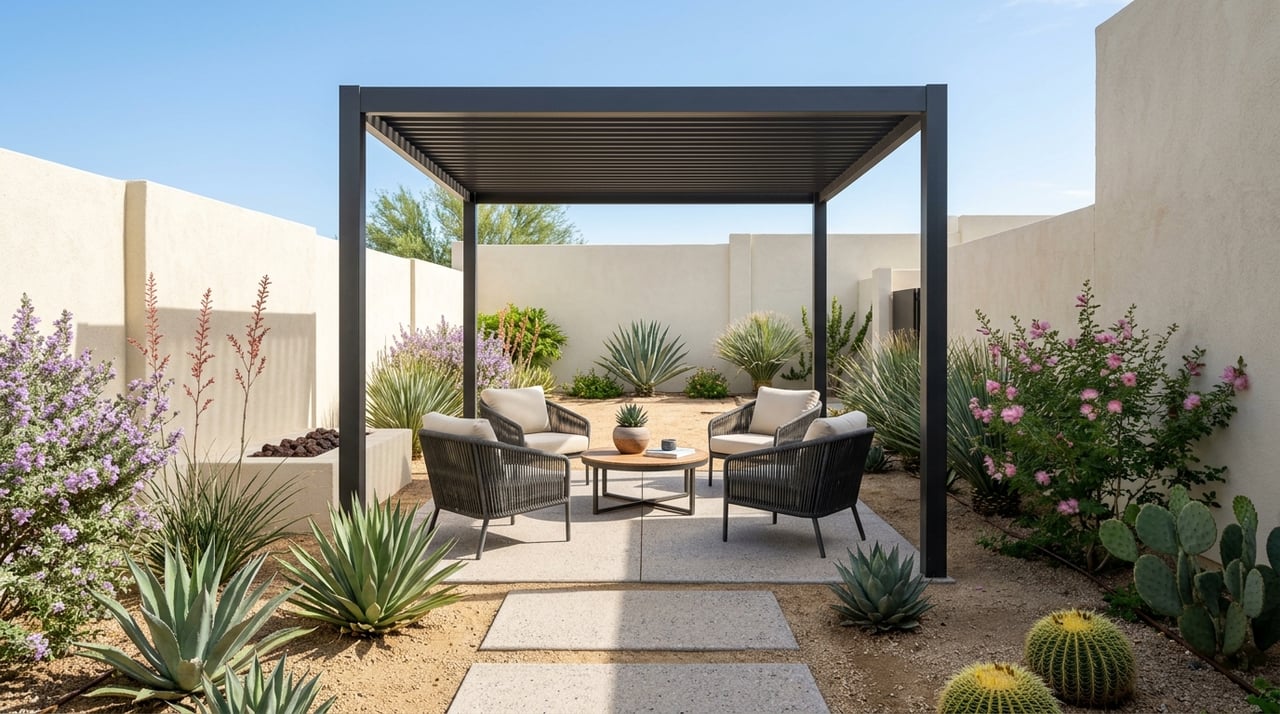
A strong Mesa backyard usually uses both immediate and long-term shade. Covered patios, pergolas, and awnings help right away, while trees create canopy over time.
This layered approach gives you comfort now and better cooling later. Mesa’s tree programs are specifically aimed at increasing canopy cover and reducing heat island effects, which supports this kind of design strategy.
Plan tree placement carefully
Before planting, think about mature size, not just how a tree looks in a nursery pot. The University of Arizona recommends planning around buildings, walkways, and utilities so your landscape works well as it grows.
That step can save you from expensive adjustments later. It also helps your yard feel balanced instead of crowded.
Choose plants that fit Mesa’s climate
A desert-friendly backyard does not mean giving up color or character. The University of Arizona says successful xeriscapes can still offer color, texture, variety, and visual interest.
The key is choosing plants that match the site and the job you want them to do. Think in layers: trees for shade, shrubs for structure, and flowering accents for seasonal color.
Trees and shrubs for structure
For backyard framework and shade, the University of Arizona describes palo verde and mesquite as popular drought-tolerant trees used in xeriscape plantings. These trees can help define your yard while supporting a cooler, more comfortable outdoor area.
For shrubs and desert structure, U of A identifies options such as creosote, hop bush, Texas mountain laurel, Arizona rosewood, jojoba, and juniper as low-maintenance choices for low- and mid-elevation desert landscapes.
Succulents and flowering accents
If you want low-fuss plants with strong visual impact, agave and yucca are common desert landscape choices. For flowering color, red yucca stands out. The University of Arizona calls it one of the best-performing landscape succulents for low- to mid-elevation Arizona and notes that established plants are virtually maintenance free.
Penstemons are another useful option for informal, water-conserving landscapes. They can add seasonal color and soften the look of gravel and hardscape.
Smarter plant selection habits
One of the easiest ways to avoid landscaping regrets is to choose plants based on function first. The University of Arizona recommends matching each plant to its mature size, sun exposure, and irrigation needs before you buy.
It also advises buying desert-adapted plants from a reputable local nursery. If you want a helpful local filter, Mesa’s conversion program requires low-water-use replacement plants from the ADWR Phoenix AMA plant list.
Use gravel and hardscape with purpose
Gravel, decomposed granite, and hardscape can absolutely belong in a Mesa backyard, but they work best when they serve a function. A well-designed yard should feel intentional, not empty.
Mesa’s xeriscape guidance makes this point clearly. The city says the goal is not simply a bare rock yard, and its conversion standards require low-water-use plants rather than turf-only or rock-only coverage.
Where hardscape adds value
Hardscape is most useful when it creates livable zones, such as:
- Walking paths
- Seating areas
- Patio extensions
- Planter borders
- Drainage routes
- Gravel basins for rain capture
These features help organize the yard and make it easier to use. They also reduce the feeling of a flat, one-note backyard.
Skip the all-rock approach
A mostly gravel yard may sound simple, but it is usually not the best answer by itself. Mesa’s standards push for a mix of plant coverage and limited hardscape in converted areas, which reflects what tends to work best visually and practically.
The city also says artificial turf does not provide shade and contributes to the heat island effect. In Mesa’s climate, cooler and more functional usually beats low-detail and low-variety.
Add water-harvesting features
Mesa gets limited rainfall overall, but monsoon storms can still send water across your yard quickly. That creates an opportunity if your backyard is designed to capture and use runoff.
The University of Arizona says harvesting rainwater can reduce drinking-water use for landscape irrigation. Mesa’s code for alternative landscape plans also references rainwater harvesting, bioswales, and xeriscaping.
Simple ways to make runoff useful
You do not need a complicated system to make rainwater work harder. Practical ideas include:
- Shallow basins around plants
- Graded gravel areas that direct runoff
- Bioswale-style drainage zones
- Mulched planting beds that hold moisture longer
Mulch can do more than improve appearance. Research from the University of Arizona notes that mulches help reduce evaporation, moderate soil temperatures, reduce erosion, and support dust control.
Think about watering and upkeep
One of the biggest myths about desert-friendly landscaping is that it needs no maintenance. In reality, it usually needs less work than a traditional lawn, but not zero work.
New plants need more attention at the start. The University of Arizona says desert-adapted plants should be watered immediately after planting and irrigated more frequently during the first few weeks or first year while they establish.
Expect less maintenance, not no maintenance
Once plants are established, many desert-adapted species need only infrequent irrigation. U of A says drip emitters are the preferred method for supplemental irrigation.
You should also expect a few routine tasks through the year, such as:
- Seasonal irrigation adjustments
- Occasional pruning
- Refreshing mulch or gravel as needed
- Monitoring plant health during extreme heat
Some shrubs also look and perform better in a natural form rather than being sheared into strict shapes. That can save time and create a softer, more relaxed desert look.
Turf alternatives for specific spaces
If you still want a softer groundcover in part of your yard, you may have alternatives to traditional grass. The University of Arizona says kurapia can serve as a low-water-use groundcover and turfgrass alternative in warm desert regions of Arizona.
This can be helpful if you want a small play area, a visual break from gravel, or a patch of green near a patio. In most Mesa backyards, though, it makes sense to use this kind of material selectively instead of trying to cover the whole yard.
Backyard updates and resale value
If you are a homeowner thinking about selling in the next few years, backyard improvements can support curb appeal. The strongest value is usually not in building the fanciest yard on the block. It is in creating a clean, attractive, climate-appropriate space that feels easy to maintain.
That idea lines up with the 2023 Remodeling Impact Report from NAR. In that report, 92% of REALTORS® said sellers should improve curb appeal before listing. Estimated cost recovery was 104% for landscape maintenance, 100% for an overall landscape upgrade, 95% for a new patio, and 83% for irrigation system installation.
Every property and price point is different, of course. In Mesa, the best backyard updates for resale are often the ones that improve comfort, reduce water demand, and make the home show well without feeling overbuilt.
Local Mesa resources to know
If you are planning a backyard refresh, Mesa offers a few helpful local resources. The city currently provides free water-conservation publications, including Landscape Plants for the Arizona Desert, Landscape Watering by the Numbers, and Xeriscape: Landscaping with Style in the Arizona Desert.
Mesa also says its grass-to-xeriscape and tree-bonus program is designed to cut landscape water use by half or more. In addition, Mesa Electric customers may qualify for a free desert-adapted shade tree through the Mesa Electric Shade Tree Program.
These resources can make it easier to plan updates with your long-term water use and yard comfort in mind.
If you are getting your Mesa home ready to enjoy now or position well for a future sale, thoughtful landscaping can make a real difference. A backyard that offers shade, smart plant choices, and practical design features can feel more livable today and more marketable tomorrow. If you want local guidance on what improvements may matter most for your property, connect with Rebecca Smith Real Estate.
FAQs
What makes landscaping desert-friendly in Mesa?
- Desert-friendly landscaping in Mesa uses low-water-use plants, thoughtful shade, efficient irrigation, and functional hardscape that fits the area’s hot, dry climate.
Can a Mesa xeriscape backyard still look attractive?
- Yes. The University of Arizona says xeriscapes can provide color, texture, variety, and interest, and Mesa notes there are many low-water-use plant options beyond rocks and cactus.
Is a gravel-only backyard a good idea in Mesa?
- Usually not by itself. Mesa’s guidance favors pairing gravel with low-water-use plants, shade, and drainage features instead of creating a bare rock yard.
What are good low-water plants for Mesa backyards?
- Research in the report highlights palo verde, mesquite, agave, yucca, red yucca, penstemons, creosote, hop bush, Texas mountain laurel, Arizona rosewood, jojoba, and juniper as strong desert landscape options.
How much water can Mesa homeowners save by replacing turf?
- Mesa says 1,000 square feet of turf can require about 35,000 gallons per year, compared with about 15,000 gallons for low-water-use plants.
How much maintenance does desert landscaping need in Mesa?
- Expect less maintenance than a traditional lawn, but not none. New plants need establishment watering, and ongoing care may include seasonal irrigation changes, occasional pruning, and mulch or gravel refreshes.